

Data center Italy: what it is and how to evaluate it best?
Behind every company management system, e-commerce platform, or cloud infrastructure, there is much more than a simple computer left running twenty-four hours a day. When a business grows and even a single hour of downtime becomes unacceptable from both an economic and reputational standpoint, the question of where to run applications leads straight to the topic of a Data center Italy. Many businesses find themselves having to decide whether to keep maintaining one or more physical servers locked in an air-conditioned closet inside their own offices or move the workload to dedicated servers hosted within a facility specifically engineered to guarantee operational continuity.
Truly understanding what Data Centers are, what systems operate behind the scenes of the racks, and what technical parameters distinguish a modern data hall from a simple wired room allows IT managers, developers, and CEOs to make an informed choice, avoiding unpleasant surprises at the first power outage or network traffic spike.
What data centers are and what architecture hides behind the racks
In its most essential definition, a data center is a specialized physical infrastructure that houses computing equipment (servers, storage systems, routers, and optical switches) while guaranteeing three vital conditions without any interruption: continuous electrical power, constant heat dissipation, and ultra-high-capacity network connectivity.
The difference between a company server room and a true technological hub lies entirely in redundancy engineering. While in a traditional office a scheduled outage at the neighborhood power substation, an air conditioner failure in August, or an accidental street cable cut is enough to isolate the company, a professional data center is built to absorb the failure of any single component without the hosted machines ever noticing.
2N power continuity, cold aisle cooling, and structural security
To understand the level of complexity of these facilities, one only needs to look at how we at Servereasy.it built our main DC1 datacenter in Settimo Milanese. On the power side, every server rack receives electricity through a 2N UPS system with physically separate battery rooms (dual Feed A + Feed B paths), backed by a 250 KVA diesel generator ready to kick in during a prolonged blackout on the public grid.
Thermal control and structural solidity also follow strict industrial principles. High-performance servers generate an enormous amount of heat which, if not dissipated immediately, shortens the lifespan of processors and drives. At our Settimo Milanese hub, the racks rest on a raised floor rated for 1500 kg/sqm and are arranged in a modular cold aisle containment system, served by a cooling plant with N+1 direct free cooling. This architecture keeps temperature and humidity constant while minimizing environmental impact and energy consumption, without ever compromising on reliability.
The classification by levels from Tier I to Tier IV
Internationally, the reliability of a data center is measured across four ascending levels defined as Tier standards (from Tier 1 to Tier 4). An entry-level facility (Tier 1 or 2) features single paths for power and cooling, which requires shutting down servers whenever extraordinary plant maintenance is needed.
Our datacenter, by contrast, was designed to Tier 3 standards with readiness for a Tier 4 upgrade. This means that every critical component, from power lines and cooling units to fiber optic routes, is redundant in such a way as to allow any maintenance or replacement work without ever interrupting the operation of the servers running in the data hall.
The burden of data center management and the comparison with an in-house server
Alongside the construction of physical plants, the other major chapter concerns daily data center management. Keeping a data hall running at peak efficiency requires constant oversight by network engineers and system administrators, periodic testing on UPS units and generators, access control, management of BGP routing sessions, active protection against cyberattacks, and immediate availability of spare hardware components ready to be swapped out quickly in the event of a fault.
When a company decides to buy a physical server and keep it in the office, it inevitably ends up taking on a scaled-down yet very expensive version of these duties: electricity bills inflated by air conditioning running day and night, business internet connectivity that cannot compare to a national backbone, and the very real risk of being offline for days if a hardware component fails out of warranty.
Choosing one of our dedicated servers hosted in the Milan datacenter completely flips this scenario: the business gets the exclusive power of an enterprise physical machine built on Supermicro hardware with AMD EPYC, AMD Ryzen, or Intel Xeon processors, without tying up capital in upfront purchases and leaving the entire burden of management to us at Servereasy.it.
| Operational Aspect | In-House Office Server | Dedicated Server in Data Center |
|---|---|---|
| Power and Cooling | Utility bill costs borne by the company, single UPS | Included (2N Feed A+B UPS, 250 KVA Generator, N+1 Cold aisles) |
| Network Connectivity | Office fiber line, saturation risk | Dark Fiber Backbones |
| Physical Hardware Failures | Spare parts purchase and downtime borne by the client | Free replacement with spare parts ready in the data hall |
| Control and Management | Local physical access in the office | Free remote IPMI/KVM access included + Managed support option |
Why the choice almost always falls on a Milan data center
Anyone looking for a high-performance Data center Italy immediately notices that almost all strategic infrastructure is concentrated in the metropolitan area of the Lombardy capital. Choosing a data center in Italy is not a trend, but a direct consequence of how the Italian and European Internet network is built.
It is in Milan, and specifically at the historic via Caldera 21 campus, that the main international fiber optic backbones meet and where most national Internet traffic passes through the MiX (Milan Internet eXchange).
The network ecosystem between Settimo Milanese, Via Caldera, and the Florence hub
To offer hosted businesses, ISPs, financial firms, and software houses maximum routing speed without a single point of failure, our architecture spans multiple interconnected hubs. Our main DC1 datacenter in Settimo Milanese (carrier and cloud provider neutral) is located just minutes from the via Caldera campus and is connected to it via 2 proprietary Dark Fibers on physically diverse paths, supplemented by 1 additional direct Dark Fiber to the Data4 campus.
Right inside the IRIDEOS Datacenter at via Caldera 21 in Milan, we at Servereasy.it maintain our own dedicated POP where we house our primary network and optical equipment, connecting directly to the heart of national data exchange. For enterprise projects and the most demanding clients who require a geographically distant safety copy outside the Lombardy area, we also operate a secondary datacenter located in the province of Florence, specifically designed to host high-reliability disaster recovery solutions.
Concrete parameters for evaluating a data center in Italy before choosing
When comparing different providers to rent a dedicated server or colocate infrastructure, looking only at the monthly price risks hiding huge differences in service quality. A decisive criterion is verifying whether the operator actually owns the facility, optical equipment, and security systems, or merely resells space leased from third parties without having technical staff on site.
ISO certifications, GDPR/NIS2 compliance, and Anti-DDoS protection
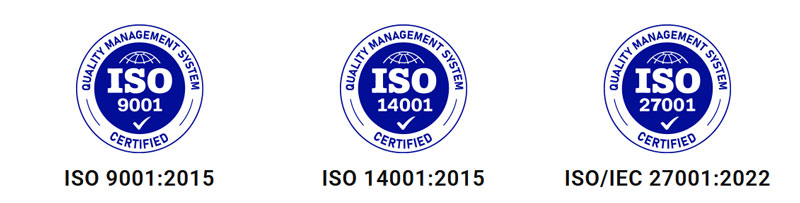
A Data center Italy capable of meeting today’s business needs must be able to demonstrate its solidity through independent certifications and regulatory compliance. Keeping physical servers and backups entirely between Milan and Florence ensures full data sovereignty under the GDPR and meets the supply chain security requirements established by the European NIS2 directive. Confirming this commitment, we at Servereasy.it have subjected our management processes to rigorous audits, obtaining the ISO 9001:2015 (quality), ISO 14001:2015 (environmental management), and ISO/IEC 27001:2022 certifications for information security, completed by the cloud extensions ISO/IEC 27017:2021 and ISO/IEC 27018:2020.
Finally, a thorough technical evaluation cannot overlook inbound traffic protection. All servers hosted in our Milan datacenter are protected upstream by our proprietary Always-On Anti-DDoS platform, developed in-house to mitigate volumetric and application-layer attacks before they can saturate server bandwidth.
Note on our Bare Metal solutions: For businesses seeking maximum computing power on dedicated hardware without the costs and complexities of an in-house server room, the page dedicated to our Dedicated Servers in Italy features all configurations with AMD and Intel processors, NVMe drives, free IPMI/KVM access, and the option for Managed system administration support.
Servereasy Answers:
Does it still make sense to keep a physical server in the office, or is it better to move it to a data center?
Keeping a server in the office entails fixed costs that are often underestimated, including continuous electricity consumption for power and summer air conditioning, as well as the risk of isolation in the event of a blackout or failure of the company internet line. Renting a dedicated server in our data center eliminates hardware purchase costs and energy bills, relying on dual 2N UPS power, a diesel generator, and a direct fiber optic connection.
If I choose a dedicated server in your data center, who handles physical hardware failures?
The management and replacement of physical components are handled entirely by us at Servereasy.it. Inside our data center, we always maintain an inventory of enterprise spare parts (SSD/NVMe drives, power supplies, ECC RAM modules, Supermicro motherboards), and our data hall technicians step in promptly to replace any faulty part at no additional cost to the client.
Is it possible to have full control of the server even if it is physically located in the data center?
Certainly. Every dedicated server we provide is delivered with full administrator access (root on Linux or Administrator on Windows) and includes free remote hardware access via an IPMI/KVM console. This tool makes it possible to power on, power off, reboot the machine, access the BIOS, and even reinstall the operating system remotely just as if standing physically in front of the rack, while our Managed system administration service is always available for those who prefer to delegate software management as well.

Our mission is to provide scalable, secure, and consistently reliable hosting and IT infrastructure solutions tailored to both individuals and businesses.
We believe hosting should be simple and transparent; that is why we invest in cutting-edge technologies and proprietary protection systems, ensuring performance and continuity in any situation.
With over 15 years of experience, we support our clients’ digital growth through expert assistance and constant innovation.
www.servereasy.it